
Department of Biological Sciences

PHILOSOPHY OF THE DEPARTMENT
The Department of Biological Sciences prepares students for Bachelor of Science (B.Sc) degrees in Botany, Microbiology and Zoology respectively. The Department is geared towards producing students that are knowledgeable and skilled in the science of Botany, Microbiology and Zoology and relevant and useful in the struggle to uplift the social, moral, and economic well-being of the country.
Department of Chemical Sciences

 Dr. A. O. O. Oladimeji
Acting Head of Department
Email:
The Department of Chemical Sciences is one of the departments established from inception when the University commenced academic activities in January 2011. It runs two programmes viz: Biochemistry and Industrial Chemistry and their affairs are coordinated by the Head of Department (HOD) of Chemical Sciences.
Department of Mathematical Sciences

HISTORY OF THE DEPARTMENT
Department of Mathematical Sciences which houses the degree programmes in Computer Science, Mathematics and Statistics is one of the pioneer Departments in the University.
The Department admitted eighteen students, six students and forty-four students at the inception to B. Tech. degree programme in Computer Science, B. Tech. degree programme in Statistics and B.Tech. degree programme in Mathematics respectively.
Department of Physical Sciences

BRIEF HISTORICAL BACKGROUND
The Department of Physical Sciences of Ondo State University of Science and Technology, Okitipupa was established in 2011 as one of the pioneer departments of the University. The department has excellent scientific pedigree, and direction arising from the quality of the Department's founding staff.
B.Tech Agricultural Economics and Extension
PHILOSOPHY OF THE PROGRAMME
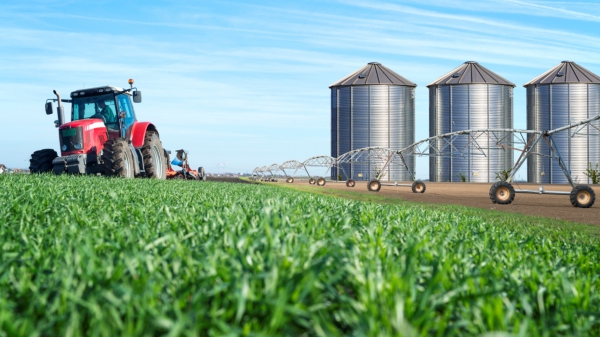
The philosophy of the Ondo State University of Science and Technology, Okitipupa is to produce practical-oriented graduates. In line with this philosophy, the Department, is designed to train graduates with broad-based knowledge of the various aspects of agriculture with a bias towards Agricultural Economics and Extension. Graduates of the Department are exposed to the rudiments (basic) knowledge of solving real life socioecomic problems associated with sustainable agricultural production and rural development. Different quantitative techniques of addressing agricultural problems with regards to micro- and macroeconomic theories, project planning and appraisals, marketing problems, managerial economics, applied statistics and farm management are taught.
It also has as its concern, the responsibility of improving the agricultural potentials of local farmers by providing extension services that bring the results of its research to the use and benefit of local farmers. The programme also provides opportunities for visits by local farmers to the Teaching and Research Farm of the University for mutual and beneficial interaction. It introduces relevant short-term training for those involved in production and management of farm products for the acquisition of techniques for improved production. Through the programme, there are collaborations with the Federal and State Government, Parastatals, Agencies and other organization in the areas of research in agricultural production and extension services. The graduates of the programme are suitable for employment in all areas of human endeavours, including financial and academic institutions, ministries, consultancy outfit, among others.
OBJECTIVES OF THE PROGRAMME
The objectives of the programme are to:
a. Train undergraduate students in the field of Agricultural Economics and Extension with emphasis on the application of economic principles to the management of agricultural business;
b. Extend modern farming techniques to the farmers through extension services
c. Train undergraduate students in basic research techniques in agricultural economics and extension;
d. Prepare undergraduate students for self-employment in all aspects of agriculture;
e. Provide services in the economics of Science and Technology of Agriculture that will be of practical use to farmers, policy makers, government and the international community; and
f. Collaborate with communities, Local, State and Federal Governments, parastatals, as well as other national and multinational agencies in the areas of research, consultancy and advisory services.
ADMISSION REQUIREMENTS
a) UTME Admission
Admission into the first year (100 level) of the programme is through JAMB. In order to be eligible for admission, candidates are expected to sit and pass the UTME. Candidates must possess five credit passes in WASCE or NECO or GCE (O/L)or equivalent at a maximum of two sittings in the following subjects: English Language, Mathematics, Chemistry, Biology or Agricultural Science and Economics or Geography. At least a pass in Physics is required.
UTME subjects: English Language, Chemistry, Biology or Agricultural Science, Mathematics or Physics.
b) Direct Entry
Candidates may be admitted into the second year (200 level) of the programme through direct entry if they:
i) have a National Diploma with a minimum of Upper Credit or equivalent from recognized Polytechnics and Colleges of Technology in relevant disciplines (Agricultural Sciences), or
ii) possess GCE (A/L) or equivalent with passes in at least two of the following subjects:
Chemistry, Biology and Physics.
Direct entry candidates must also meet the requirements for UTME admission
specified in ‘a’ above.
DURATION OF PROGRAMME
The duration of the programme is five academic sessions for students admitted through the UTME and four for Direct Entry students. If a student admitted through the UTME fails to graduate in five academic sessions, he or she will NOT be allowed to exceed a total of fourteen (14) academic semesters. For Direct Entry students, the maximum residence period is twelve ( 12) academic semesters.
REQUIREMENTS FOR GRADUATION
To be eligible for the award of B. Agric. Tech. (Agricultural Economics and Extension), a student must have:
- passed all core courses as well as all University and Faculty required courses and electives recommended for specialization.
- accumulated a minimum of 191 Units for UTME students, 148 for Direct Entry students and obtained a CGPA of not less than 1.5, and
- successfully completed all field practicals, industrial attachment training, seminars and projects.
- Direct entry students (A/L and JUPEB) are expected to audit and pass GST 101, 102, 111, 113 and 112. In the event that they fail any of the courses, they will have to register for and pass it.


 Wednesday, 15 June 2022 17:40
 1.58 MB
 14,261
Additional Info
- Schools Agriculture, Food and Natural Resources
- Duration 5 years
- Department Agricultural Economics and Extension
- Accreditation Status Full Accreditation
- Courses Link Apply Now
Legal Unit
Olatunji C. ATOLAGBE, Esq.
Coordinator, Legal services Unit
Email:
BRIEF/LIST OF FUNCTIONS OF THE UNIT
Responsible to the Vice-Chancellor for:
• Provision of legal advice on matters referred to the legal Unit;
• Drafting of legal documents;
• Liaison with University Solicitor on behalf of the University;
• Other Ad-hoc duties as directed by the Vice-Chancellor or Registrar from time to time;
• Representing the University in the Law Courts;
• Secretary to all the University’s Companies and business enterprises registered with the Corporate affairs Commission.
• Membership/attendance of Statutory Committees
• Oath administration
LIST OF STAFF
1. Olatunji C. ATOLAGBE, Esq.
2. Adeleke Israel ADESANOYE
B.Tech Crops, Soil and Pest management
PROGRAMME PHILOSOPHY
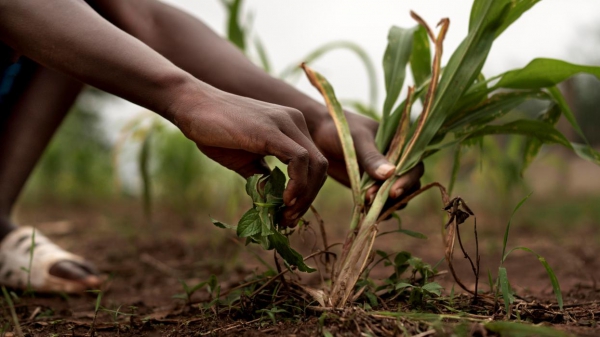
The department has as its philosophy, the training of the required manpower in the crop production technology and advancing its frontiers through teaching, research and extension. The academic programme of the department takes into consideration the fundamental principles and practices of the different areas of crop production, including product harvesting, processing, preservation and consumption. By placing adequate emphasis on adaptable technologies in crop and soil management, crop improvement and protection, post-harvest operations and consumption, the department abridges current inadequacies of similar programmes existing in conventional universities. Further, the department focuses attention on the establishment of sound technologies for sustainable crop production, protection, management, processing, renewal and product management. Graduates from this department can be gainfully employed in self- sustaining enterprises such as small-scale crop farms and crop processing factories. Also, the graduates can find suitable employment in government establishment (ministries and parastatals), agro based companies (food and chemical), private farms and banks.
OBJECTIVES OF THE PROGRAMME
The objectives of the programme are to;
- Train undergraduates broadly in the field of agricultural production with emphasis on crop production, soil management and pest management;
- Emphasize in the course of training , appreciation of the role of insect pests, diseases and weeds in crop production through diagnosis of pest attack and elaboration of preventive and curative measures;
- Train undergraduates in basic field experimentation techniques; and
- Prepare undergraduates for self-employment in general agriculture, particularly in the various spheres of crop production, including soil and pest management.
ADMISSION REQUIREMENTS
a. UTME Admission
Admission into the first year (100 level) of the programme is through the UTME. Candidates must have credits at WASSCE or NECO or GCE O/L or equivalent examinations at a minimum of two sittings in the following subjects: English language, mathematics, chemistry, biology or agricultural science and one of Geography, Physics and Economics. Candidates must have at least a pass in physic.
UTME Subjects: English language, mathematics, chemistry, biology or agricultural science.
b. Direct entry
Candidates may be admitted into the second year (200 level) of the programme through direct entry if:
- They have the national diploma with a minimum of upper credit from recognized polytechnics or colleges of technology or the Nigerian certificate in education (NCE) or equivalent in relevant agriculture- based disciplines such as agricultural education and crop production technology; or
- They possess at least two GCE advanced level/JUPEB passes in biology and any of the following subjects: chemistry, physics and mathematics.
Direct entry candidates must also meet the requirement for UTME admission in ‘a’ above.
PROGRAMME DURATION
The duration of the programme is five academic sessions for students who enter in by UTME admission but for direct entry students it is four. If a student fails to graduate in five academic sessions, he or she will NOT be allowed to exceed a total of fourteen semesters in the case of students admitted through the UTME and twelve semesters in the case of direct entry students.
REQUIREMENTS FOR GRADUATION
To be eligible for the award of B.Agric. Tech. (Crop, soil and pest management), a student must have:
- Passed all core courses as well as University and School Required courses and any elective recommended for specialization;
- Accumulated at least 194 credit units for the five year programme and 151 credit units for direct entry programme and obtained a CGPA of not less than 1.5 for 2017/2018 session only, and not less than 1.0 for subsequent sessions.
- Successfully completed all field practical, industrial attachment training, seminars and projects.
- Direct entry student (A level, JUBEB) are expected to register and pass the following general studies courses GST 101, 102, 111, 112 and 113.
Additional Info
- Schools Agriculture, Food and Natural Resources
- Duration 5 years
- Department Crop, Soil and Pest Management
- Accreditation Status Full Accreditation
- Courses Link Apply Now
B.Tech Fisheries and Aquaculture Technology
PHILOSOPHY OF THE PROGRAMME
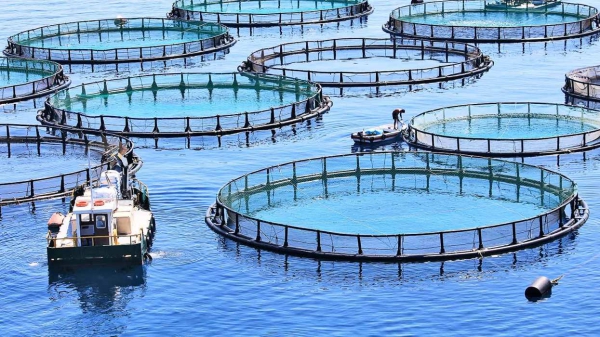
The philosophy of this programme is to produce graduates who are adequately trained and equipped with comprehensive knowledge and skills required for self-reliance in fish production technology as may be necessary for meeting current societal and economic needs. The curriculum is structured to meet the demands of academic activities, training, research and community development services for application to other similar situations locally and internationally. Students are to be trained in an environment provided with highly relevant human and material resources using effective methods of instruction and exposure to the actual practice of fisheries management and aquaculture production. As a result, students are given opportunities for formal training at the undergraduate and postgraduate levels for the acquisition of basic and higher degrees. Such training programmes are executed through classroom instructions, laboratory and field practical demonstrations, seminars, workshops, excursions to fisheries research institutes and Students’ Industrial Work Experience Scheme (SIWES). The programme prepares graduates who are to be self-reliant in fish production and can be employed in any fisheries establishments and other related industries locally and internationally.
6.1 OBJECTIVES OF THE PROGRAMME
The objectives of the programme are to:
- produce graduates with adequate scientific knowledge of fisheries and aquaculture technology and entrepreneurial ability for self-employment and wealth generation.
- produce graduates who can easily exploit fisheries and aquaculture resources for domestic and industrial uses as well as for the improvement of the environment.
- train students as skilled fisheries and aquaculture scientists and instructors for undergraduate and postgraduate programmes in tertiary institutions in Nigeria and beyond.
- provide relevant training in attaining of self-sufficiency in fisheries management and aquaculture production.
- provide opportunities for result-oriented research in fisheries and aquaculture to meet local, national and international needs.
- disseminate the results of research output to the public and facilitate the practical application of these results.
- assist in the attainment of significant increase in fish production and provision of raw materials to support the growth of industries.
- facilitate rural employment opportunities and improvement in the standard of rural livelihood.
- participate effectively in sustainable fish production through collaboration with Federal, State and Local governments, government ministries, agencies and parastatals, fisheries research institutes and other international organizations in the field of fisheries and aquaculture.
ADMISSION REQUIREMENTS
a) UTME Admission
Admission into the first year (100 level) of the programme is through JAMB. In order to be eligible for admission, candidates are expected to sit and pass the UTME. Candidates must possess five credit passes in WASCE or NECO or GCE (O/L)or equivalent at a maximum of two sittings in the following subjects: English Language, Mathematics, Chemistry, Biology or Agricultural Science and Economics or Geography. At least a pass in Physics is required.
UTME subjects: English Language, Chemistry, Biology or Agricultural Science, Mathematics or Physics.
b) Direct Entry
Candidates may be admitted into the second year (200 level) of the programme through direct entry if they:
- have a National Diploma with a minimum of Upper Credit or equivalent from recognized Polytechnics and Colleges of Technology in relevant disciplines (Agricultural Sciences), or
- possess GCE (A/L) or equivalent with passes in at least two of the following subjects: Chemistry, Biology and Physics.
Direct entry candidates must also meet the requirements for UTME admission specified in ‘a’ above.
DURATION OF PROGRAMME
The duration of the programme is five academic sessions for students admitted through the UTME and four for Direct Entry students. If a student admitted through the UTME fails to graduate in five academic sessions, he or she will NOT be allowed to exceed a total of fourteen (14) academic semesters. For Direct Entry students, the maximum residence period is twelve ( 12) academic semesters.
REQUIREMENTS FOR GRADUATION
To be eligible for the award of B. Agric. Tech. (Fisheries and Aquaculture Technology), a student must have:
- passed all core courses as well as all University and Faculty required courses and electives recommended for specialization
- accumulated a minimum of 195 Units for UTME students, 154 for Direct Entry students and obtained a CGPA of not less than 1.5 for 2017/18 session only and not less than 1.0 for subsequent sessions.
- successfully completed all field practicals, industrial attachment training, seminars and projects.
- Direct entry students (A/L and JUPEB) are expected to register and pass the following General studies courses; GST 101, 102, 111, 112 and 113.
Additional Info
- Schools Agriculture, Food and Natural Resources
- Duration 5 years
- Department Fisheries and Aquaculture Technology
- Accreditation Status Full Accreditation
- Courses Link Apply Now
B.Tech Food Science and Technology

PROGRAMME PHILOSOPHY
Food is one of the basic needs of life, while science and technology brings positive advancement to human condition. Philosophy of Food Science and Technology programme is to contribute innovatively to advancement in the nation food sector through postharvest processing of agricultural product to ensure food and nutritional security; and produce competent Food Scientist and Technologist who are empowered with technological and entrepreneurial skills that enhance problem solving through workable research, job creation and self-employment in food sector of the nation and internationally.
This shall be achieved through quality and outstanding teaching, scientific and societal values, research and community development.
OBJECTIVES OF THE PROGRAMME
The objectives of the programme are to:
- train students to understand/study the composition and behaviour of agricultural food material under diverse processing and storage conditions; and capable to apply the knowledge in production of safe and nutritious foods;
- trained students capable of introducing new innovation and apply appropriate technology to process, preserve and package food for reduced drudgery, postharvest loses and food security;
- train students who are competent to maintain and design food process equipment and innovatively develop locally made equipment for food production; and
- ultimately, produce graduate with expertise and technological competency to establish and manage food industries, provide and formulate policy leading to food security; and able to transfer knowledge in food related higher institutions of learning.
ADMISSION REQUIREMENTS
a) UTME
Candidate seeking admission into the five-year programme in food science and technology programme should possess the WASC or WASSC or GCE (O/L) or NECO or equivalent with credit passes in five subjects including English language, mathematics, chemistry, physics biology or agricultural science, at not more than two sittings. In addition, application must obtain an acceptable pass in the unified tertiary matriculation examination (UTME).
UTME subjects: English language, mathematics or physics, chemistry, biology/agricultural science.
b) Direct Entry
Candidates may be admitted to 200 level if they have:
- satisfied the general entry requirements for the University as specified in (a) above
- obtained National Diploma (with a minimum of Upper Credit) or equivalent in Food Science and Technology or any other course adjudged relevant by the Department; or
- good passes at GCE (Advanced Level), JUPEB or its equivalent in any two of the following subjects: Physics, Chemistry and Mathematics. In addition, candidates in this category may be required to audit and pass some first year courses to remedy deficiencies. These courses include GST 101, GST 111, AGP 102 and GST 102. If a student fails any of the courses, he/she will be required to offer it formally.
PROGRAMME DURATION
The bachelor of technology programme in food science and technology runs normally for 5 academic sessions for UTME candidates and 4 sessions for direct entry candidates. However, if the student fails to graduate within the normal number of sessions, he/she will not be allowed to exceed a total of 7 academic sessions in the case of UTME candidates and 6 for direct entry students.
REQUIREMENTS FOR GRADUATION
To be eligible for the award of B.Tech Degree in food science and technology, a student must have:
- Passed all core (compulsory) courses as well as all university and school required courses and electives recommended for specialization;
- Accumulated at least 202 units for students through UTME and 168 for those by direct entry, and obtain a CGPA of not less than 1.5 for 2017/18 session only; and not less than 1.0 for subsequent sessions.
- Successfully completed all class works; industrial attachments, seminars and projects.
As part of the programme, students take part in the long vacation industrial practical work (SWEP-Student Work Experience Programmes), in the second semesters of 200 and 300 levels, to enable them reconcile the theoretical knowledge with what obtains in the industries and farms. In the second semester of 400 levels (4th year), they also go on a six-month students’ industrial work experience scheme (SIWES) in a food industry.
Direct entry students (A’ level and Jupeb) are expected to register and pass the following general studies courses; GST 101, 102, 111, 112 and 113; GET 101 and 102
Additional Info
- Schools Agriculture, Food and Natural Resources
- Duration 5 years
- Department Food Science and Technology
- Accreditation Status Full Accreditation
- Courses Link Apply Now
B.Tech Forestry, Wildlife and Enviromental Management

WITH OPTIONS IN:
Ecotourism Resources Management
Forest Resources Management
Wildlife Resources Management
PROGRAMME PHILOSOPHY
The Primary philosophy that guides the training of students is the production of skilled manpower that is adequately furnished with the comprehensive information required, for engaging in Forestry, Wildlife and Environmental Management in an environment characterized by rural setting and adequate land endowment. Such knowledgeable professional manpower has to be produced in an atmosphere with the widest possible human and material resources, through the adoption of effective techniques of instruction, and exposure to the actual practice of forestry. Consequently, this programme provides opportunities for formal training at the undergraduate level for the acquisition of basic degree. These training programmes are mounted through classroom instruction, laboratory practicals, field demonstration, and workshop practice.
THE OBJECTIVES OF THE PROGRAMME
(i) To produce graduates with sufficient practical background to create employment from utilization of Forestry, Wildlife and Ecotourism resources. The graduates are also expected to be able to undertake local sourcing of industrial raw materials, to produce animal protein through demonstration and ranching of farm wildlife and also engage in food production through agroforestry.
(ii) To produce the required manpower which will not only be used in staffing forestry and wildlife establishments nationally but which also would be able to carry out relevant, mission oriented researches into all aspects of Forestry Wildlife, and Ecotourism the yet unexplored benefits and products which can serve as bases for newer industries.
ADMMISSION REQUIREMETS
a) UTME
Candidate seeking admission into the five-year programme in Forestry, Wildlife and Environmental Management must possess at least five credits in WASC, SSCE, GCE (Ordinary level), or equivalent at not more than two sittings in Chemistry, Biology or Agricultural Science, Mathematics, English language and one of Geography, Physics and Economics. Candidate must have at least a pass in Physics. In addition, applicants must obtain an acceptable pass on Unified Tertiary Matriculation Examination (UTME).
UTME Subjects: The U.M.E subjects are English language, Chemistry, Biology or Agricultural Science, Mathematics or physics.
b) Direct Entry
For admission by direct entry (into second year of the programme), candidate must possess in addition to (a)above any of the following requirements:
- National Diploma (ND with Lower credit) or equivalent, or Higher National Diploma (lower credit) in Forestry or Agriculture from recognized institutions.
- GCE Advanced level or equivalent at one sitting in at least two of the following subjects: Physics, Chemistry and Biology with a minimum of 6 (six) points.
- Holders of National Certificates in Education with Agriculture double major and at credit pass level
PROGRAMME DURATION
Theprogramme is normally for a duration of five (5) academic sessions for UTME candidates and four (4) academic sessions for direct candidates. A student should under normal circumstances spend five academic sessions to obtain the bachelor degree. However, if the student fails to graduate within the normal number of sessions, he/she will not be allowed to exceed a total of seven (7) academic sessions.
REQUIREMENTS FOR GRADUATION
To be eligible for the award of B.Agric.Tech. (Forestry, Wildlife and Environmental Management) degree, students must have:
- Passed all core courses prescribed by the Department, as well as the University and Faculty required courses and electives recommended by the department for specifications;
- Accumulated a minimum of 194 course units for the five year programme or 1.50 course units for direct entry and obtained a CGPA of not less than 1.50; and for 2017/2018 session only and not less than 1.00 for subsequent session.
- Successfully completed all field practical, Industrial Work Experience Scheme and undergraduate project based on supervised research.
- Direct entry students (A/Level and JUPEB) are expected to register and pass the following general studies courses GST 101, 102, 111, 112 and 113. In the event that they fail any of the courses , they will have to register for and pass it.
Additional Info
- Schools Agriculture, Food and Natural Resources
- Duration 5 years
- Department Forestry, Wildlife and Environmental Management
- Accreditation Status Full Accreditation
- Courses Link Apply Now
Subscribe to our Newsletter
About OAUSTECH
Olusegun Agagu University of Science and Technology (OAUSTECH), Okitipupa was established by the Ondo State government in 2008. It was initially named as Ondo State University of Science and Technology (OSUSTECH).
It is a technology-based institution, which aims at providing the needed manpower training for industrial and technological development of Ondo State and Nigeria as a whole.